
If you’re planning a custom build or remodeling an existing home in Tennessee, one piece of advice you’ll hear from professionals is: don’t skimp on insulation. In fact, experienced insulation contractors and home builders across the Volunteer State are increasingly recommending spray foam insulation for both new construction and retrofit projects. Why? Because spray foam offers superior energy efficiency, air sealing, and longevity compared to traditional insulation materials.
Tennessee contractors choose spray foam to create more comfortable, efficient homes, and this upgrade can benefit your own build or remodel.
Building for Tennessee’s Climate
Tennessee presents a mix of climate challenges. In East Tennessee, cold Appalachian winters and hot, humid summers mean homes need robust insulation for year-round comfort. Middle and West Tennessee face sweltering summer heat and mild winters with occasional deep freezes. In all cases, controlling indoor temperature and humidity is key to a comfortable home. Spray foam insulation excels at this by providing both high thermal resistance and an effective air barrier. By expanding to fill gaps and sealing tightly, spray foam prevents the unwanted airflow that undermines other insulations. This is crucial in a state where humidity can creep into wall cavities, or where cold drafts can seep through cracks in winter. Traditional fiberglass or cellulose often leave small gaps or allow air movement, but spray foam creates a continuous seal that keeps indoor conditions stable.
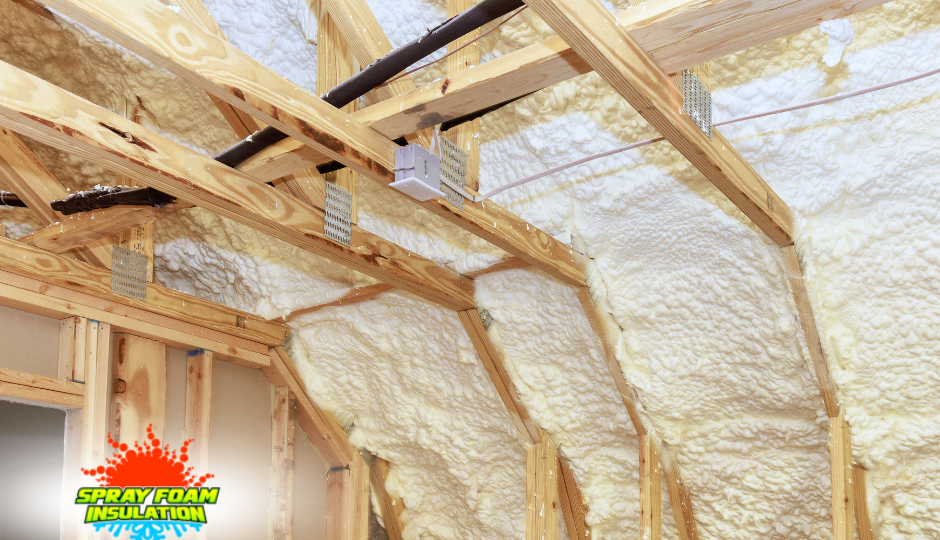
Tennessee home builders aiming to meet modern energy codes find that spray foam makes it easier to hit the required insulation R-values and air leakage targets in one product. For example, in a new custom home, open-cell spray foam between studs can achieve R-13 to R-20 in walls (depending on thickness) and also seal the framing to greatly reduce air changes per hour. Closed-cell foam can push wall R-values even higher in a compact space. In attics, spraying foam along the roof deck (unvented attic design) not only insulates but brings the attic inside the conditioned envelope. This keeps HVAC equipment in a friendly environment, improving its efficiency and lifespan. Our Tennessee insulation services often involve spray foaming attics so that homeowners can gain these benefits – no more super-heated attics in August or ice-cold attics in January that tax your HVAC system.
Remodeling older homes in Tennessee also presents a chance to vastly improve energy performance. Many pre-1980s homes have patchy or thin insulation, and almost all leak air like a sieve by today’s standards. Our insulation contractors frequently retrofit spray foam into wall cavities during renovations, or apply it to crawl space walls and attic slopes. The transformation is significant: rooms become less drafty, temperature swings diminish, and HVAC run-times drop. In one case, a homeowner in Knoxville noticed their upstairs stayed ~10°F cooler in the summer afternoons after we applied spray foam in the attic – a testament to foam’s power in our Southern heat. Additionally, because spray foam doesn’t settle or sag, its performance won’t degrade after a few years as can happen with blown-in insulation. It’s a future-proof choice for the long haul of your home.
The Remodeling Edge: Spray Foam’s All-in-One Solution
When you’re remodeling, you’re often working within the confines of an existing structure. That means you might have odd-sized cavities, existing wiring/plumbing to work around, and limited space to add insulation. Spray foam is ideal in these scenarios because it conforms to any shape and can insulate even hard-to-reach areas. For example, if you’re finishing an attic bonus room in a Chattanooga home, the rafters may be only 2×6. High-density closed-cell spray foam can provide the needed R-value in that shallow space while also acting as a vapor retarder – something that would be hard to achieve with fiberglass batts plus additional ventilation and vapor barriers. It simplifies the assembly while exceeding traditional insulation performance.
Contractors also appreciate spray foam for solving common insulation mistakes. Gaps left between batts, compression of fiberglass, or misaligned vapor barriers can all reduce insulation effectiveness or cause moisture issues. With spray foam, these worries are largely eliminated – the foam itself seals and insulates in one step, and it’s installed by trained professionals using specialized equipment. This reduces the chance for human error that often comes with cutting and fitting batts. As one insulation expert noted, “closed-cell foam adheres fully to studs and sheathing, enhancing structural integrity and reducing movement”. That means less drywall cracking in new builds and a more solid feel to the home overall.
Another edge for remodels: spray foam’s ability to reinforce and stiffen existing structures. Tennessee gets its share of strong thunderstorms and even tornadoes. While nothing makes a home tornado-proof, every bit of structural strength helps. Closed-cell foam can glue roof decks to rafters and wall sheathing to studs, potentially increasing racking strength significantly. Many contractors cite this as a fringe benefit when insulating pole barns or bonus rooms – it’s like adding a layer of adhesive across the building. When you’re updating an older home, having that extra bond can improve its resiliency to high winds or seismic vibrations (East Tennessee is near the New Madrid seismic zone).
Importantly, spray foam can also contribute to a healthier indoor environment post-remodel. By sealing gaps, it helps block out dust, pollen, and insects that might infiltrate an older home. And because it’s not a food source for mold (being made of inert polymers), it can deter mold growth in wall cavities as long as other moisture sources are controlled. Homeowners who replace musty old insulation with spray foam often remark on the fresher smell and cleaner air. One reason is that air leaks were previously carrying crawl space or attic dust into living spaces – once sealed, that pathway is gone. Additionally, many older homes had “insulation contractors” in the past who used materials like rockwool that can shed fibers; spray foam locks everything in place.
Return on Investment and Long-Term Savings with Spray Foam
The upfront cost of spray foam is higher than some other options, but the ROI can be very compelling. Many Tennessee homeowners recoup their spray foam investment through energy savings in as little as 3-5 years. After that, it’s money in your pocket every month. Because spray foam so dramatically reduces the load on HVAC systems, some homeowners are even able to install smaller HVAC units in new builds or avoid adding a second unit during expansions. This can save thousands on the HVAC side of a project – effectively offsetting the insulation cost. We’ve seen cases where a high-performance spray-foamed home could use a 2-ton AC where a similar size code-minimum home would have needed a 3-ton. That’s immediate capital savings and ongoing operational savings.
There are also incentives that improve the financial picture. A federal tax credit (30% of the cost) is available for insulation upgrades. Tennessee homeowners can take advantage of this to reduce their tax bill for the year of the project. Some local utilities offer rebates for air sealing and insulation as well – for example, Knoxville’s TVA EnergyRight program or NES in Nashville have had such rebates historically. As professional insulation contractors, we stay informed on these programs and can help point you in the right direction. The combination of energy bill reductions and incentives makes spray foam one of the best investments you can make during a remodel or build. And unlike fancy countertops or luxury finishes, insulation actually pays you back.
When your home maintains temperature easily, when you don’t feel that cold spot by the windows in January or that stuffiness upstairs in July, it greatly improves daily life. Clients often tell us that upgrading insulation was the best thing they did – the house is simply more livable. From a contractor’s perspective, we love handing over a home that we know will delight the owners with low utility bills and high comfort for years to come. It reflects well on our work and leads to referrals. This is why more and more Tennessee builders are going the extra mile to insulate with spray foam. It differentiates their homes in a competitive market where buyers are now paying attention to energy efficiency and build quality.
Partner with the Insulation Pros for Your Project
If you’re considering spray foam for your Tennessee home project, be sure to work with qualified professionals. Proper installation is critical to getting the results we’ve talked about. As insulation contractors with extensive experience in spray foam, our team at Pikeville Spray Foam Insulation ensures that every cavity is filled and every critical junction sealed. We follow building codes and best practices specific to Tennessee – for instance, adding ignition barriers over foam in attics or crawl spaces as required, and coordinating with building inspectors on vapor retarder needs in humid climates. Our goal is to make the process seamless for you and your general contractor. We handle everything from protecting your job site during installation to trimming excess foam and cleaning up, so the next trades can work smoothly.
We’ve partnered with numerous builders and remodelers across Eastern and Middle Tennessee, earning a reputation for reliability and quality. Whether it’s a new custom home in Johnson City, a historic renovation in Knoxville, or a cabin build in the Smokies, we bring the same expertise. We’re happy to consult early in your project planning to discuss insulation options and how spray foam might integrate. Sometimes, we even do cost comparisons, showing how you might save on other materials (like smaller ducts or HVAC units) by investing in foam insulation. Our aim is to give you the information needed to make the best decision for your home and budget.
When it comes to building or improving a home in Tennessee, spray foam insulation is often the choice of professionals for good reason. It creates a more durable, efficient, and comfortable home – something you’ll appreciate every day and in your utility bills.
If you’re ready to explore this upgrade, contact Pikeville Spray Foam Insulation. Our team will evaluate your project and provide a detailed quote, along with any guidance on available rebates or credits. Trust the insulation contractors that Tennessee builders rely on. We’ll help ensure your new build or remodel is not only beautiful and well-crafted but also exceptionally well-insulated for the Tennessee climate.
