

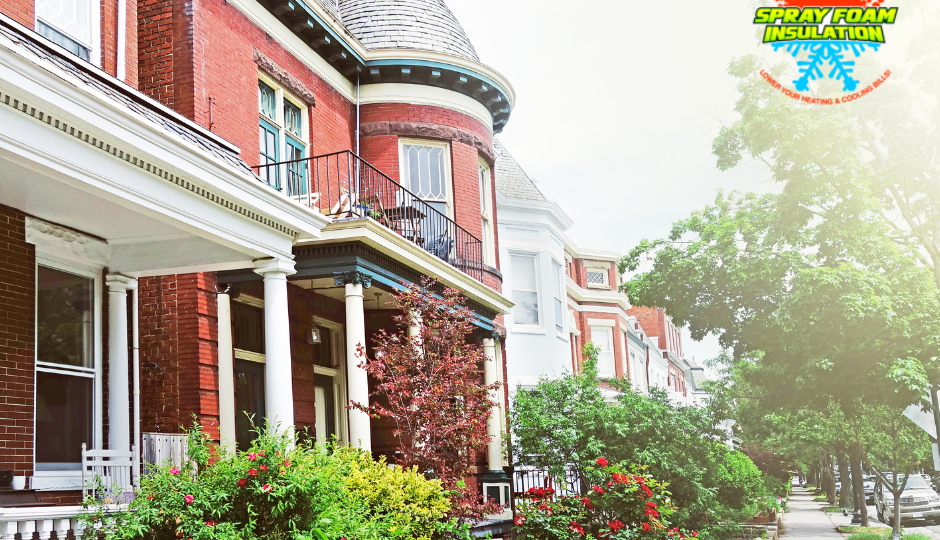
Virginia is home to many beautiful historic houses, from colonial-era homes in small towns to Victorian and early 20th-century houses in cities like Bristol and Abingdon. These older homes boast character and craftsmanship, but often lack modern insulation. Thin walls, drafty windows, and uninsulated attics were the norm in past eras, which can leave these homes chilly in winter, sweltering in summer, and expensive to heat and cool. The good news is that reviving a historic Virginia home with modern insulation can dramatically improve comfort while preserving its character. In this article, we explore insulation solutions tailored for older homes – including the use of spray foam, blown-in materials, and other techniques – and how they can bring 19th-century houses up to 21st-century efficiency.
The Challenges of Insulating Historic Homes
Older homes have unique challenges when it comes to insulation. The construction methods and materials differ from modern homes. You may have solid masonry walls (brick or stone with plaster inside), balloon-framed walls with no insulation, or irregular stud spacing that doesn’t fit standard batts. Attics might have old vermiculite or minimal rockwool insulation. Crawl spaces or basements may be vented or unsealed. Additionally, historic homes often have no vapor barriers and were designed to “breathe” – meaning they leak air, but that airflow helped dry out moisture in the days before central HVAC. Simply sealing everything up can risk trapping moisture if not done carefully. There’s also the matter of not disturbing historic fabric: homeowners understandably want to retain original plaster walls, ornate trim, or exterior appearance.
Despite these challenges, improvements are very achievable. A key principle is to insulate while managing moisture appropriately. This might mean using spray foam or rigid insulation in certain areas and opting for permeable materials in others to allow some drying. It’s also important to seal air leaks, but ensure the home has proper ventilation after (especially if adding AC). Many historic Virginia homes have no insulation at all in walls – meaning an upgrade can cut heat loss tremendously and stop the drafts that plague these old houses. For instance, insulating an uninsulated wall can reduce heat loss through that wall by a huge margin, depending on materials (as per Oak Ridge National Lab data). That’s huge for comfort and cost.
Let’s consider a common scenario: a 1910s two-story home in Abingdon with wood siding and plaster-on-lath walls. Likely no insulation in walls, a drafty attic with maybe a couple inches of old insulation, and a basement or crawl with bare floors above. In winter, you feel the cold radiating off the walls and floors, and the furnace runs non-stop. In summer, upstairs is baking hot. By adding insulation in strategic places – attic first, walls second, and crawlspace last – you can transform how this house performs.
Attic Insulation: The First Priority
For any old house, the attic is usually the top priority for adding insulation. That’s because heat rises and attics are often accessible. In Virginia’s climate (mixed humid, with hot summers and cold winters), a well-insulated attic is crucial. Many historic homes have walk-up attics or at least storage space, which means we can get in there to insulate. We recommend aiming for about R-38 to R-60 in the attic (the modern code is around R-49 in our region). Achieving this might involve blowing in cellulose insulation across the attic floor – a common approach that adds a thick blanket without disturbing plaster ceilings below. Blown cellulose is nice for older homes because it fills gaps around irregular joists and any old wiring or pipes. It’s also fire-retardant treated and mold-resistant, an advantage over the old materials up there.
But before blowing insulation, air sealing the attic floor is key. In older homes, numerous penetrations (around chimneys, pipes, light fixtures) allow air exchange between the house and attic. We use spray foam or caulks to seal those up prior to insulating. This is important because if you just insulate and not seal, warm moist air from below can still get into the attic and possibly condense on a cold roof – leading to moisture issues or ice dams. According to the EPA’s Energy Star program, sealing leaks in the attic can save 15% or more on heating/cooling, and it also prevents air leakage that can account for up to 40% of energy loss. It’s no wonder that after an attic retrofit, homeowners often notice immediate comfort improvements and less draftiness.
In some historic homes, the attic is finished or they want to use it as living space. In that case, we might apply spray foam insulation to the roofline (between rafters) instead of insulating the floor. This turns the attic into a conditioned space. We’ve done this in historic renovation projects where the attic was converted to an office or bedroom. Open-cell spray foam is often used for this purpose; it provides good R-value and allows a bit of vapor permeability (which can be safer for roof health, letting the wood dry if any small leaks occur). In fact, one historic home renovation in Fort Wayne reported by a contractor involved using spray foam in the attic to super-insulate a 100-year-old house without altering its appearance. The key was making sure the roof had no active leaks and, after foaming, keeping the attic semi-conditioned to avoid moisture buildup.
Wall Insulation: Balancing Efficiency and Preservation
Insulating the walls of an older home can be the trickiest part. If the interior plaster is in great shape and you don’t want to tear into it, one option is blown-in insulation from either the interior (through small holes in plaster) or exterior (by removing some siding rows). Blown-in cellulose can be installed into wall cavities with minimal disturbance. We often do this by carefully drilling 2-inch holes in the plaster between each stud bay (usually near the top of the wall behind where molding can cover, or sometimes from closets to hide later), then filling the cavity under pressure, and patching the hole. From outside, if the house has wood siding, we can remove a course and drill through the sheathing to do the same, then replace the siding – this sometimes is preferred to avoid disturbing plaster at all.
Blown-in insulation will greatly reduce heat transfer and also somewhat reduce drafts coming through the walls (though not as much as foam, because cellulose still allows some air flow). In one historic house we upgraded, the homeowner noted the rooms were immediately quieter and less drafty after wall insulation – not only does it insulate, it also provides soundproofing and plugs many little gaps.
However, one must be cautious with moisture in walls. Older homes with brick or wood exteriors and plaster interiors don’t have moisture barriers. They relied on airflow in wall cavities to dry out any water. If we dense-pack those cavities, we must ensure the exterior is reasonably water-tight (no major leaks) and that we use a material that won’t trap water against wood. Cellulose is generally good in this regard because it can safely absorb and release moisture and is treated to resist mold. Spray foam in walls (especially closed-cell) can be riskier in some historic assemblies, as it could trap moisture and it’s not reversible (and as some preservationists note, not easily removable later if the wall needs to dry out or if foam causes issues). That’s why for many historic projects, we choose dense-pack cellulose for walls – it’s a compromise that boosts efficiency while respecting the building’s need to breathe a bit. (Note: modern spray foams and techniques can be used in walls too with great success, but it requires a case-by-case analysis of the wall structure and materials).
If interior walls are being gutted during a renovation, then it’s easier – we can insulate like a new home, and often will use open-cell spray foam or batt insulation in the new framing, with appropriate vapor retarders as needed. But many historic preservation projects aim to keep plaster and trim intact, so blow-in is the way to go.
Foundations and Other Areas to Insulate
Historic houses often have basements or crawl spaces that are uninsulated. Just like with other homes, addressing these can improve comfort (warmer floors, less drafts). In Virginia’s climate, insulating the rim joist around the top of the foundation yields big benefits. We use spray foam there typically because it seals all the little gaps and provides good R-value in a narrow space. This stops a major source of infiltration – you’d be surprised how much cold air can leak in where the wood framing sits on the brick or stone foundation.
If the house has a basement that isn’t a finished space, we might insulate the basement ceiling (i.e. the first floor from below) or insulate the basement walls depending on usage. In many cases, insulating basement walls with foam board or spray foam and adding a vapor barrier to the ground (if dirt floor) will help keep the whole house warmer and the basement drier. The same concept as crawl encapsulation we discussed earlier applies – many Virginia older homes in places like Alexandria or Richmond have brick or stone basements that can benefit from a judicious sealing and insulating, while still allowing some controlled ventilation to avoid humidity buildup. Each situation is unique; for example, a stone foundation might need to breathe outward so we’d avoid vapor-sealing it fully on the inside if it’s in great shape (maybe use mineral wool insulation that doesn’t trap moisture).
The Payoff of Quality Insulation from the Pros: Comfort & Preservation
When we undertake insulating a historic home, we do so with respect for its materials and story. The payoff for the homeowner is a dramatically more comfortable living environment and lower energy bills, all while the home retains its historic charm. As one expert said, an “insulated house cuts energy bills significantly and makes for very comfy occupants… whereas a poorly insulated house can quickly turn into a nightmare”. We’ve seen this proven time and again. For instance, after one 1890s farmhouse in Independence, VA was insulated (attic and walls dense-packed, plus crawl encapsulated), the owners noted the winter indoor temps became steady and they could use a smaller wood stove than before – previously they were burning through firewood just to keep rooms tolerable.
It’s also satisfying that these efficiency improvements extend the life of the home. Wooden elements kept drier and more stable in temperature will last longer (less expansion/contraction stress, less moisture = less rot). The historic windows (if kept) can even benefit: by reducing drafts and maybe adding storm windows, we can make original windows perform pretty well without full replacement, thus preserving those wavy-glass panes another century. Good insulation also means less stress on heating systems – which in many historic homes are older or unique (like boiler radiators). They’ll have an easier job keeping up.
And, importantly for many, insulating an older home helps reduce energy waste and environmental impact. Large historic houses can be guzzlers of fuel; improving their efficiency is a win for the homeowner’s wallet and for reducing greenhouse gas emissions. There are even programs and grants sometimes available for weatherizing historic homes – Virginia’s Dept. of Energy has information on incentives that can apply even in preservation contexts.
If you live in a historic Virginia home, know that you don’t have to accept discomfort as the price of history. With careful planning and the right materials, you can greatly improve your home’s insulation without damaging its character. Our team has a passion for blending modern building science with historic preservation.
Contact us at Pikeville Spray Foam Insulation if you’d like to explore insulating your older home. We serve Southwest Virginia and beyond, from Bristol to Wytheville and small towns in between. We’ll assess your home’s construction and recommend the best approach – whether it’s gentle blow-in insulation or strategic spray foam usage – to give you a more comfortable home that retains all its original charm. Let’s keep those historic homes standing proud, and make them enjoyable to live in for generations to come.
