

When considering spray foam insulation for your Kentucky home, you’ll encounter two types: open-cell and closed-cell foam. At a glance, both are excellent insulators – but they differ in density, moisture resistance, and ideal applications. Let’s break down how open-cell and closed-cell spray foam compare and how using them together can usually provide the best coverage.
Understanding Open-Cell and Closed-Cell Foam
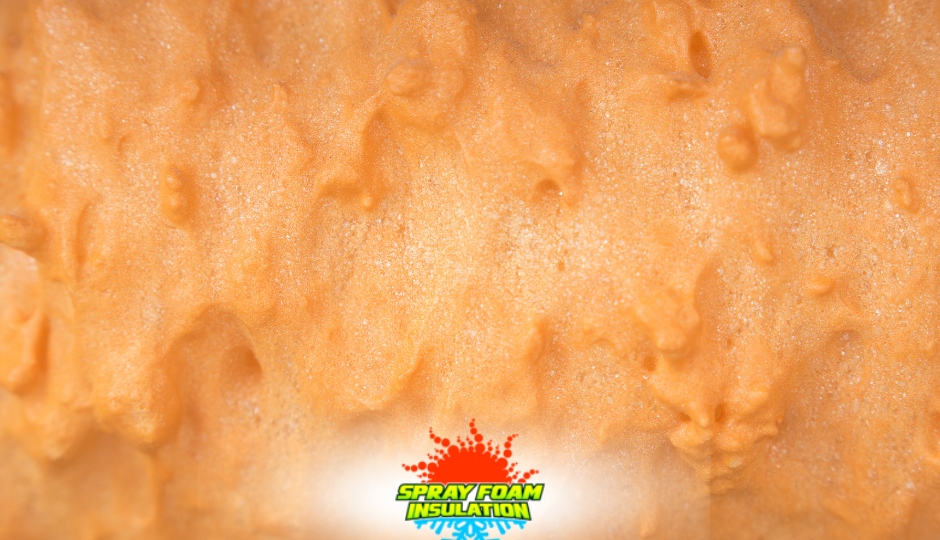
Open-cell spray foam is lighter and expands more than its alternative. Its cells are not fully encapsulated, which makes the foam soft and spongy. This structure gives open-cell foam a lower R-value (about R-3.5 to R-4 per inch). However, open-cell excels at sound absorption, and is often used for noise reduction in interior walls because its porous texture dampens sound transmission.
It’s also vapor-permeable, meaning it allows some moisture to pass through. This can let wooden structures “breathe,” though it also means open-cell foam does not form a vapor barrier. In fact, even though open-cell can serve as an air air-seal at sufficient thickness, it will still require an additional vapor retarder in humid areas or cold environments.
Closed-cell spray foam, on the other hand, is much denser. Its cells are completely closed, creating a rigid, hard foam once cured. Closed-cell offers roughly double the R-value per inch of open-cell (around R-6 to R-7 per inch). At just 1.5–2 inches thick, closed-cell foam acts as an effective vapor barrier as well as an air seal. This means it blocks moisture and vapor from passing through – a key advantage in crawl spaces, basements, or any area prone to dampness.
Closed-cell’s rigidity also adds structural strength to building elements; when applied inside wall cavities or under roof sheathing, it can increase the stiffness of those assemblies. Many builders value this extra durability, especially in storm-prone regions, because the foam can reinforce walls and roofs. (By contrast, open-cell foam’s softness means it doesn’t bolster structure – but it is more flexible, which can be useful if minor shifting or expansion/contraction of materials is expected.)
Cost is another differentiator. Open-cell foam uses less material and typically costs less per board foot. Closed-cell foam is more material- and labor-intensive, so it comes at a higher price point. However, because closed-cell has higher insulation value, you may use less thickness of it to reach the required R-value. Homeowners on a strict budget might opt for open-cell in larger volumes, while those seeking maximum performance or space-saving insulation (high R in a tight cavity) might justify the cost of closed-cell.
Pikeville Spray Foam Combines Open & Closed-Cell
Usually, we prefer to open-cell in some parts of the house and closed-cell in others. For example, open-cell could insulate interior walls and ceilings for sound control, while closed-cell is applied in the basement or crawl space for moisture control and higher R-value in a confined space. Both types can even be used together in the same area (closed-cell applied first in a thin layer for air sealing and strength, sometimes called “flash coat,” then open-cell sprayed on top to build R-value at lower cost). The best choice really depends on the specific needs of each part of your home.
It’s also worth noting that Kentucky lies south of the traditional “Pennsylvania border” rule-of-thumb for insulation. Many professionals suggest using open-cell in the more southern, warmer regions and closed-cell in more northern, frigid climates. Kentucky’s winters, while cold, are not as extreme as those in the far north – meaning open-cell foam can usually perform well here for attics and walls, provided a vapor retarder is in place where needed.
However, if your home is in a particularly damp location or you simply want the absolute best insulating performance, closed-cell foam will provide a higher safety margin against moisture and heat loss. For example, a closed-cell application under your roof could better prevent any risk of condensation in an unvented attic, and it will add a bit of structural reinforcement to your roof deck as a bonus.
Ready to upgrade your home’s insulation? Contact Pikeville Spray Foam today to learn more or schedule a free consultation. We install both open-cell and closed-cell spray foam with professional precision. With the right choice, you’ll enjoy a more comfortable home and lower utility bills for years to come – no matter what the weather brings!
